
Industry Overview
What Is Roll-to-Roll Converting?
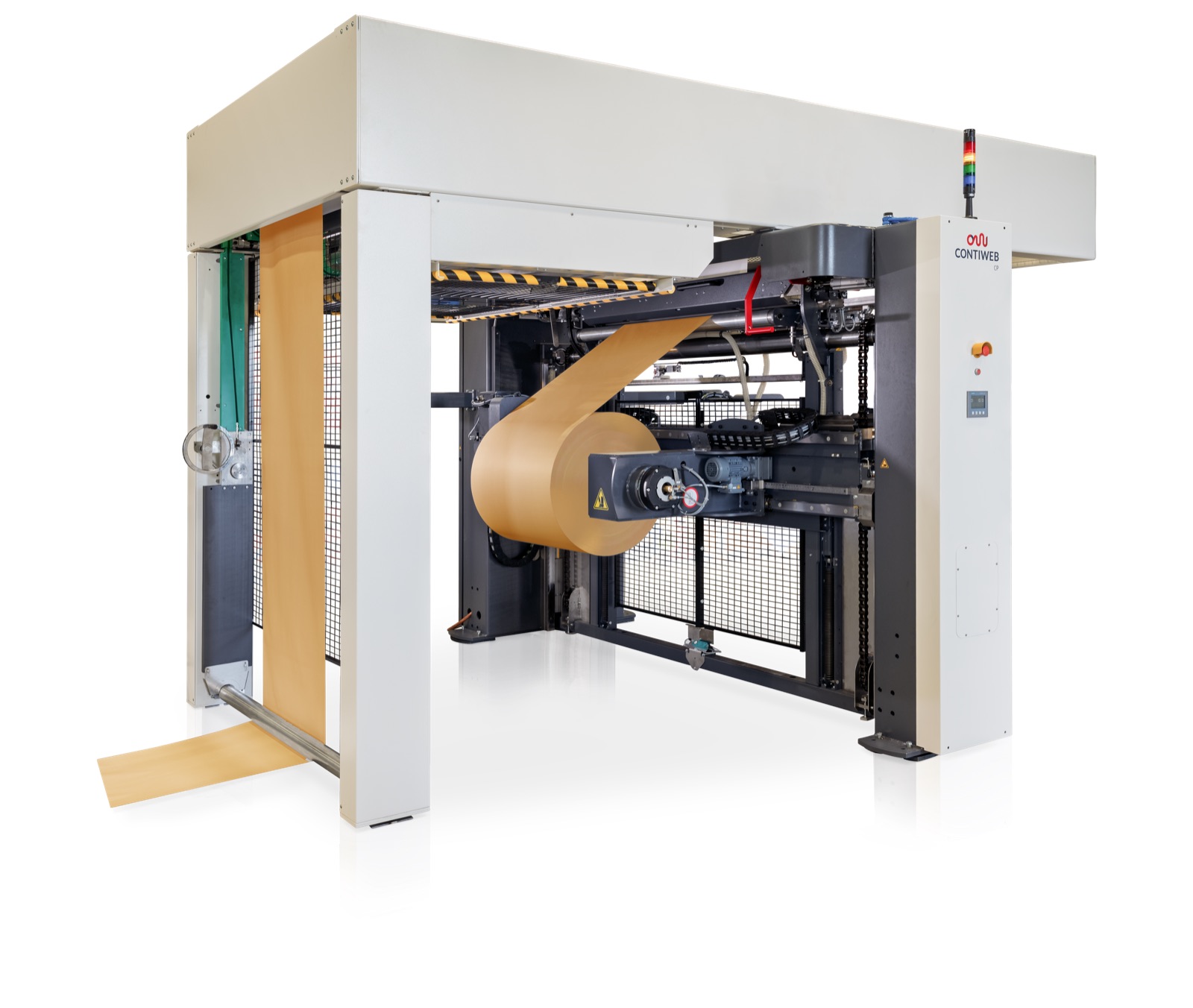
Roll-to-roll (R2R) converting is a manufacturing process that transforms a continuous, flexible material — a “web” — into a more finished product. A substrate starts on a roll, value is added, and it ends on a roll. It’s a process foundational to industries most people interact with every day.
The Process
How Roll-to-Roll Converting Works
At its core, R2R converting is a three-step process — but the range of treatments and materials that happen in between is what makes it one of the most versatile manufacturing methods in the world.
Unwind
A rolled substrate is unwound and fed into the machine. The continuous web flows through the system under controlled tension, speed, and alignment.
Process
The web passes through a series of value-adding steps — coating, printing, lamination, cutting, slitting, drying, metallizing, or other treatments — that transform the base substrate into something more useful.
Rewind
The material is rewound onto another roll or divided into smaller rolls, ready for further processing or distribution. For some substrates, this is the finished product. For others, value continues to be added downstream.
Team reviewing production data at a control station
What Is a Web?
A web is a sheet of flexible, continuous material capable of running through a machine. The substrate is what the process transforms — and R2R handles an enormous range of them, from paper and plastic films to metal foils, woven fabrics, and beyond.
Explore the converting glossaryWhy R2R Converting?
The Advantages — and the Challenges
R2R converting offers powerful advantages, but it requires the right expertise to capture them. Understanding both sides is what separates companies that struggle from those that thrive.
Advantages
Economical
Continuous webs can be produced at far higher speeds than discrete sheet processing, without the start-stop losses that come with it.
High Throughput
The continuous nature of R2R reduces downtime and supports high-volume, efficient production at scale.
Scalability
R2R accommodates increasing demand without major equipment or line modifications, making it well suited to mass production.
Flexibility
The process handles a wide range of substrates — plastics, papers, fabrics, foils — making it adaptable across electronics, sensors, solar, and more.
Reduced Waste
Continuous processing minimizes material waste between production runs compared to batch methods.
Improved Consistency
Because all material undergoes the same steps, products exhibit greater uniformity from start to finish.
Considerations
Equipment Complexity
R2R systems require specialized machinery and expertise. Initial setup and maintenance costs can exceed simpler batch systems.
Process Control
Maintaining precise control across a continuous system is challenging. Variations in ambient conditions or substrate properties can affect output quality.
Quality Control
Detecting defects in real time can be difficult, and in some cases issues aren't identified until significant material has already been processed.
Material Limitations
R2R is best suited to flexible materials and may not fit rigid or large-format products that don't run well on a continuous web.
Many of these challenges can be mitigated with the right expertise — which is a large part of why the converting community exists. Connect with our Technical Advisory Panel.
Applications
Products Made with Roll-to-Roll Converting
R2R manufacturing touches an enormous range of everyday and advanced products — from the packaging on groceries to the batteries in electric vehicles.
- Flexible & printed electronics — flexible displays, RFID tags, printed sensors, wearables
- Batteries — thin-film and flexible battery designs, lithium-ion electrode processing
- Flexible packaging for food, medical, and consumer goods
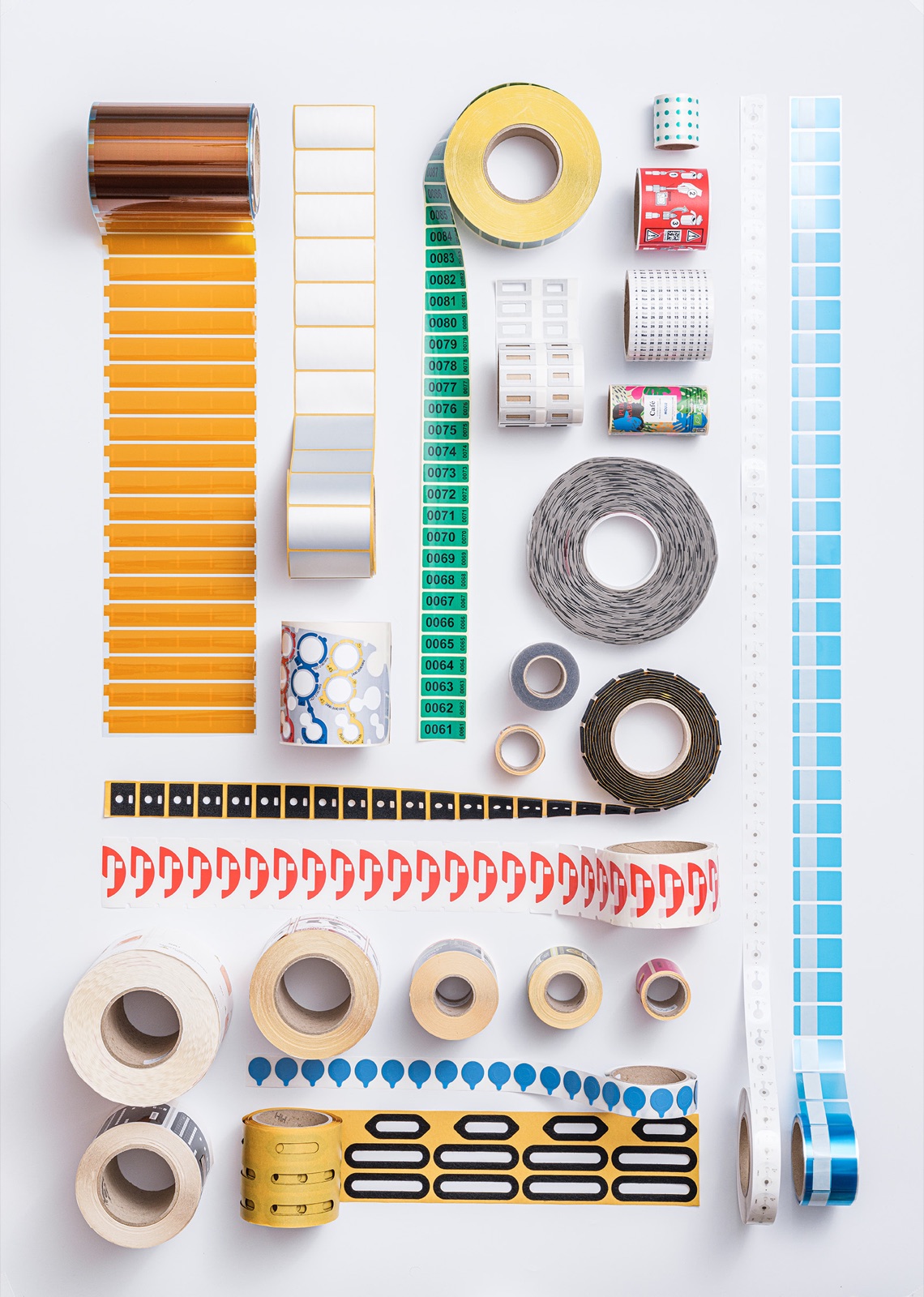
- Labels and decals
- Membranes and filters — water purification, air filtration
- Photovoltaics and flexible solar panels
- Medical devices — wound dressings, transdermal patches, bio-sensors, drug-delivery systems
- Thin films for optical coatings, barrier layers, and protective applications
Flexible & printed electronics
Flexible packaging
Photovoltaics & solar
Key Markets
A Look at Where R2R Is Growing
Roll-to-roll converting plays a role across a wide set of major industries — and demand is accelerating across all of them.
Battery & Energy Storage
30% annual growth · $400B+ by 2030
The lithium-ion battery market is expanding rapidly, with continued innovation spanning R2R manufacturing methods, cell and pack design, and new opportunities in battery chemistry and end-of-life solutions. R2R processing is also central to solar panel and fuel cell manufacturing.
Food & Flexible Packaging
$44B market in 2024
Flexible packaging continues to deliver enhancements in shelf stability, reduced material weight, and improved customer experience — while the industry works to be part of the solution in the circular economy. R2R is at the heart of how this packaging is made.
Printed & Flexible Electronics
Rapidly expanding into smart packaging & medical
Currently established in RFID tags and flexible LED strips, printed electronics is expanding into smart packaging and medical applications. R2R processing enables the low-cost, high-volume production these markets require.
Medical Devices & Bio-Sensors
Fast-growing as digital printing capabilities expand
Beyond conventional bandages and blister packs, the larger opportunity lies in flexible electronics for bio-sensors and drug-delivery systems. R2R manufacturing is lowering costs and enabling innovation across this high-value market.
“Roll-to-roll converting is foundational to industries most people interact with every day, often without realizing it — from the packaging on their groceries to the batteries in their devices. As demand grows across electronics, energy, and packaging, the converting industry is positioned at the center of that growth.”
Go Deeper
Explore the Converting Basics Library
Twelve deep-dive guides covering every core process in R2R converting — from coating and laminating to web handling and quality control.
Coating
Mayer rod, knife-over-roll, slot die, gravure, reverse roll, curtain, and the fundamentals of coat weight and rheology.
Laminating
Wet bond, dry bond, solventless, extrusion, and thermal lamination — how converters combine layers into one structure.
Finishing
Die cutting, embossing, perforating, scoring, and sheeting — the operations that bring a web to its near-final form.
Testing & Inspection
In-line measurement, vision inspection, coat weight gauging, tension monitoring, and off-line lab testing.
Slitting
Shear, razor, and score slitting — plus duplex, turret, and log slitter configurations.
Flexographic Printing
Flexographic press configurations, digital, screen, and offset printing used across R2R converting.
Gravure Printing
Engraved cylinders, engraving methods, and why gravure delivers consistent density on long runs.
Surface Treatment
Corona, plasma, and flame treatment — how converters raise surface energy for better adhesion.
Metallizing
Thermal evaporation, e-beam, and sputtering — how converters deposit thin metal and oxide layers in vacuum.
Winders & Unwinders
Shaft-mounted, shaftless, and turret unwinds; center, surface, and gap winding configurations.
Web Handling
Web path, tension, guiding, nip safety, and the defects that come from getting web handling wrong.
Drying & Curing
Convection, infrared, UV, EB, and conduction — how converters take a wet coating to its final solid form.