
In R2R converting, quality cannot be recovered after the web has been wound, processed, and delivered — by then the material may have been converted, printed, or shipped. Effective quality control builds measurement into the process at each step, enabling real-time decisions and continuous improvement.
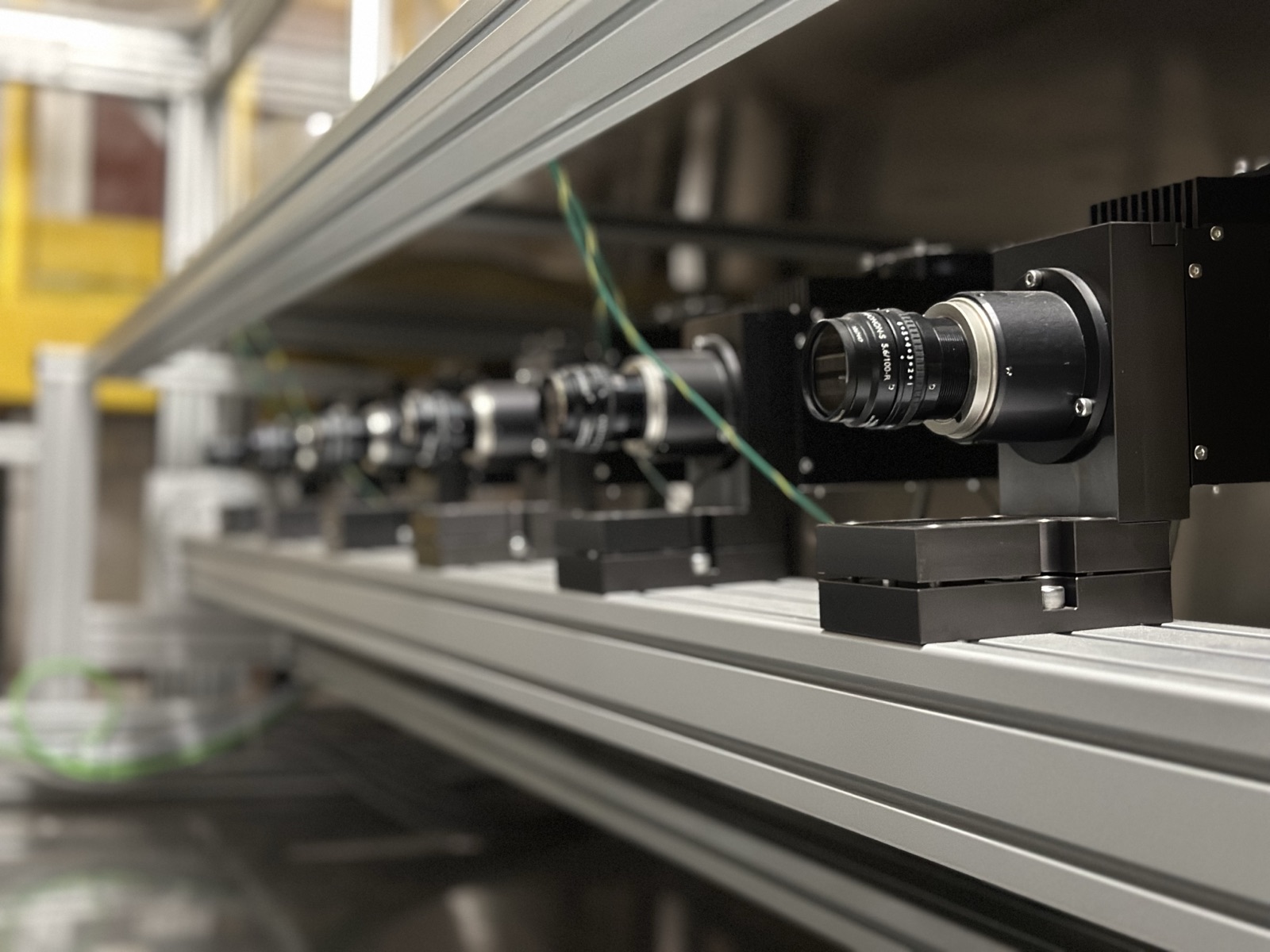
100% inspection camera system mounted over web
In-Process vs. Off-Line Testing
- In-line measurement
- Sensors or cameras mounted directly over the web as it runs — coating weight, thickness, tension, color. Enables real-time feedback without stopping the line.
- On-press sampling
- Samples cut from the web at regular intervals are taken off-line for lab testing — bond strength, barrier testing, surface energy. Periodic rather than continuous.
- End-of-line inspection
- 100% inspection of the completed roll before it leaves the line — using camera systems to check every square meter for surface defects.
Vision & Surface Inspection
Vision & Surface Inspection
Camera-based inspection systems scan the full web width at line speed, detecting defects like pinholes, inclusions, streaks, coating defects, and print errors. Detected defects are logged with their position and can trigger a stop, a slow-down, or an automated flag mark on the roll.
Why use it
100% coverage of the web surface at production speed — finding defects that sample-based inspection would miss.
Common uses
High-value, defect-sensitive products: medical packaging, barrier films, printed flexible packaging.
Coat Weight Measurement
Measuring how much coating has been applied to the web — and confirming it's uniform across the width and along the length — is critical for both product performance and material cost control.
Beta Gauge
Measures coating weight by transmitting beta radiation through the web and detecting the attenuation — common for in-line coat weight monitoring.
X-Ray Gauge
Uses X-ray transmission rather than beta radiation — better for thicker coatings and when radiation source handling is a concern.
Near-Infrared (NIR)
Measures moisture content, coat weight, or specific chemical species by analyzing how the web absorbs infrared light. Widely used in drying control.
Tension & Web Control Monitoring
Tension sensors — typically load cells under rollers — provide continuous measurement of web tension in each zone of the machine. Monitoring tension profiles across a run is important both for product quality (avoiding deformation) and machine safety (preventing breaks).
Load cell tension measurement roller
Off-Line Lab Testing
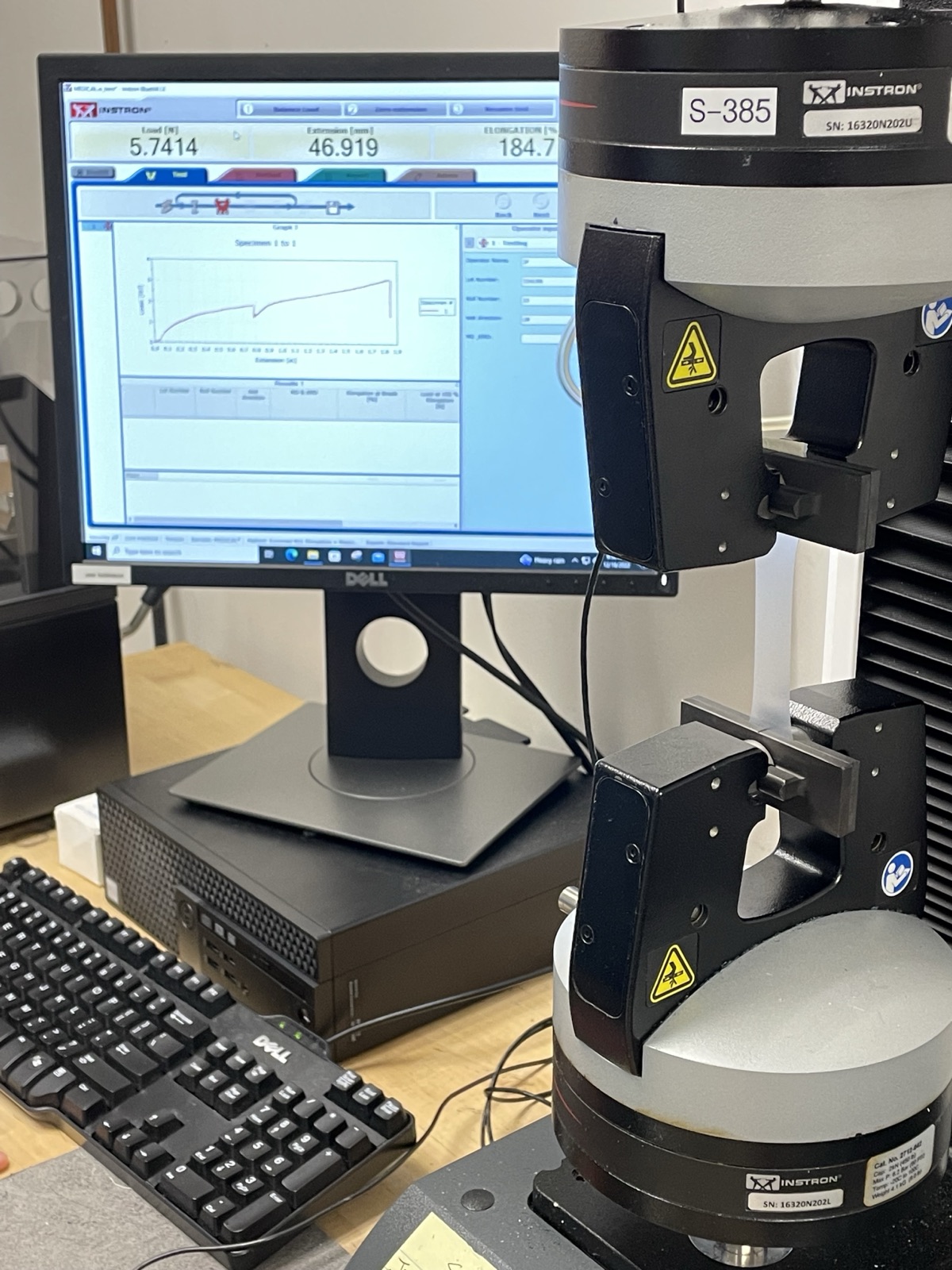
- Peel strength (bond strength)
- Measured on a tensile tester — quantifies how much force is required to separate laminated layers. The primary quality measure for most laminations.
- Barrier testing (OTR / WVTR)
- Oxygen Transmission Rate and Water Vapor Transmission Rate measure how much gas or moisture permeates a film or laminate — critical for food packaging performance.
- Surface energy (dyne level)
- Confirms treatment level using dyne pens or fluids. A basic, fast on-press check before printing or laminating begins.
- Optical density (OD)
- For metallized films — measures the opacity of the metal layer as a proxy for thickness and barrier quality.
Testing, inspection, and quality control selection involves additional considerations that benefit from SME review before this page goes live.