
Coating applies a liquid, adhesive, or functional formulation to a web's surface, transforming a base substrate into a material with new properties — a barrier layer, an adhesive, a printable surface, a conductive circuit, or countless other functions. The coating method chosen for a given line has a direct impact on precision, cost, achievable coat weight, and the range of viscosities and materials that can be run.
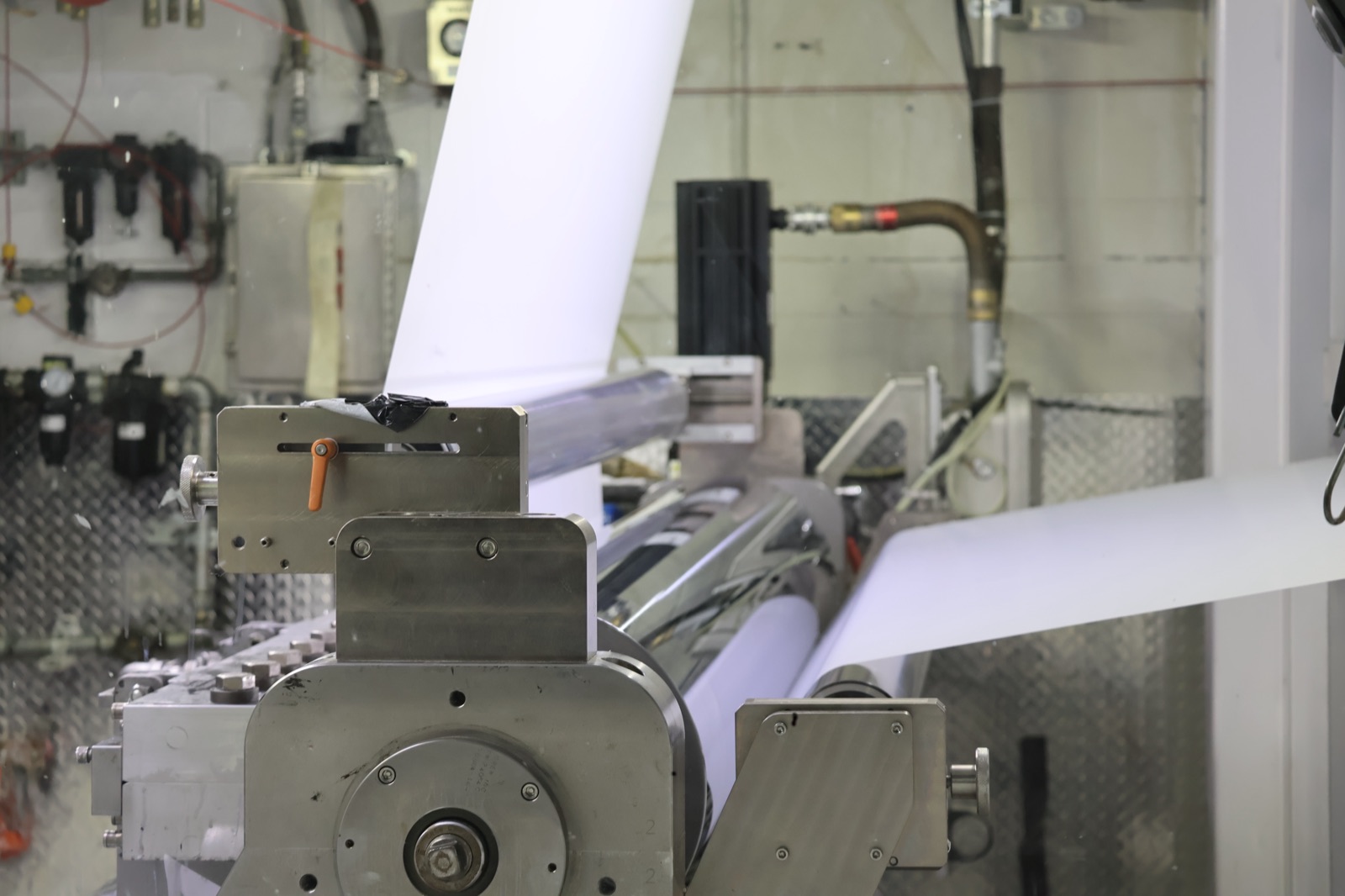
The Basics
A coating process generally involves three stages: applying the coating fluid to the web (application), removing any excess to achieve the target thickness (metering), and drying or curing the coating into its final form. Some methods combine application and metering into a single step (premetered methods), while others apply an excess of fluid and remove the surplus afterward (postmetered methods).
- Coat weight
- The amount of coating applied per unit area — typically the most important quality target in a coating process. Usually specified as a wet coat weight (as applied) and a dry coat weight (after drying or curing removes solvent or water).
- Viscosity & rheology
- How the coating fluid flows and behaves under the shear forces of the process. Different coating methods suit different viscosity ranges, and a fluid's rheology affects how well it can be metered, leveled, and dried without defects.
- Coating window
- The range of line speeds and flow rates within which a given method can apply a stable, defect-free coating. Running outside this window can lead to streaking, air entrainment, or an unstable coating bead.
Viscosity / rheology test setup
Common Coating Methods
Mayer Rod Coating
A wire-wound metering rod is drawn across the web (or a roll carrying excess fluid), with the wire's diameter controlling how much fluid passes through the grooves between wraps. Changing to a rod with a different wire diameter changes the coat weight, making the method simple to adjust.
Why use it
Simplicity and low cost. Straightforward to set up and operate, well suited to lower-viscosity fluids and thinner, uniform coatings.
Common uses
Adhesives, primers, release coatings, and functional coatings where precise but modest coat-weight control is needed.
Knife-Over-Roll (Blade) Coating
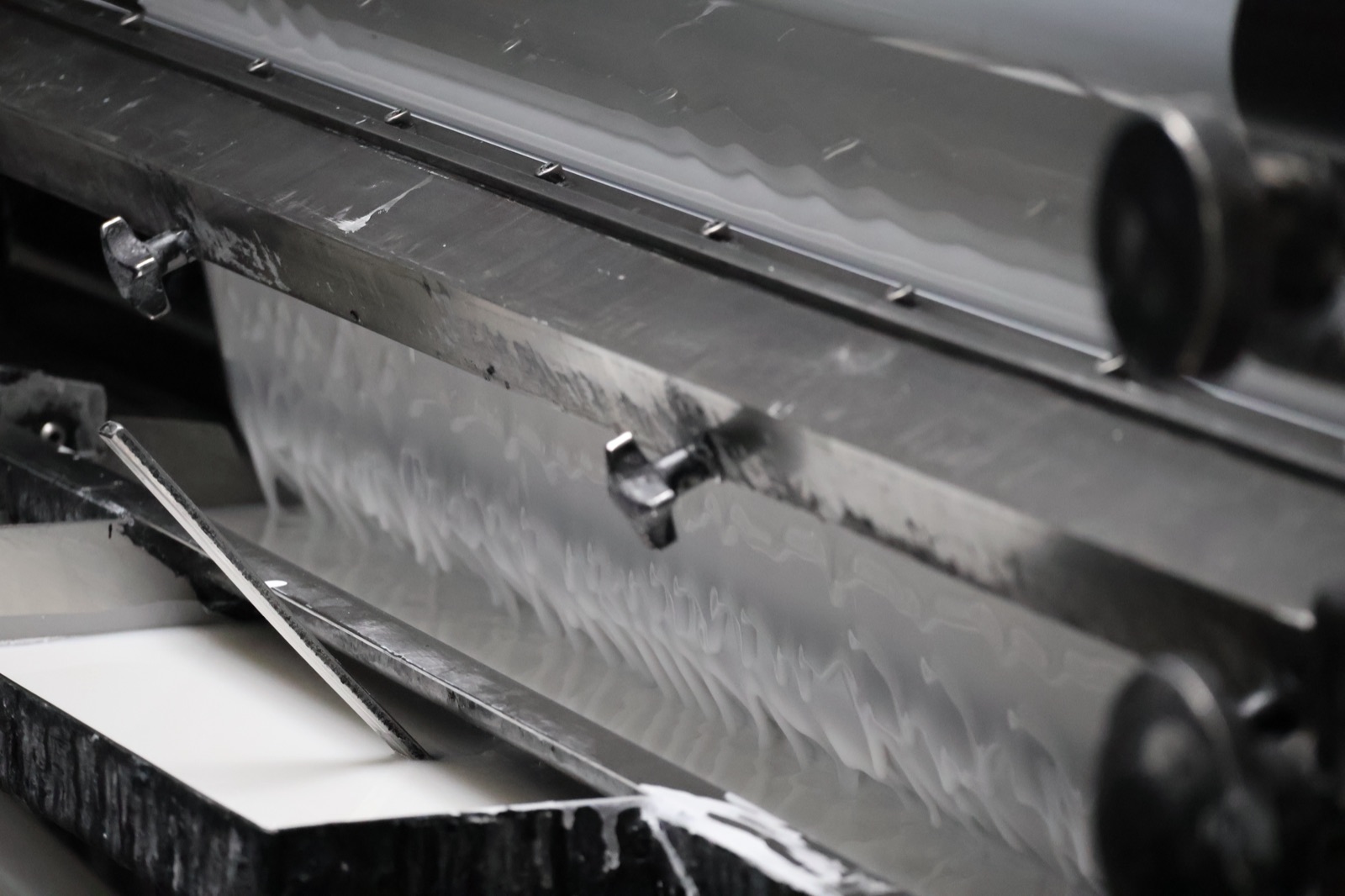
A stationary blade is set at a fixed gap above a roller carrying the web. Excess coating fluid, applied ahead of the blade, is scraped off as the web passes beneath it, leaving a layer controlled by the blade gap.
Why use it
Handles a wider range of viscosities than rod coating, including thicker fluids, and is a cost-effective way to apply heavier coat weights.
Common uses
Textile and carpet backcoating, adhesive coatings, and paper coating where heavier or more viscous coatings are required.
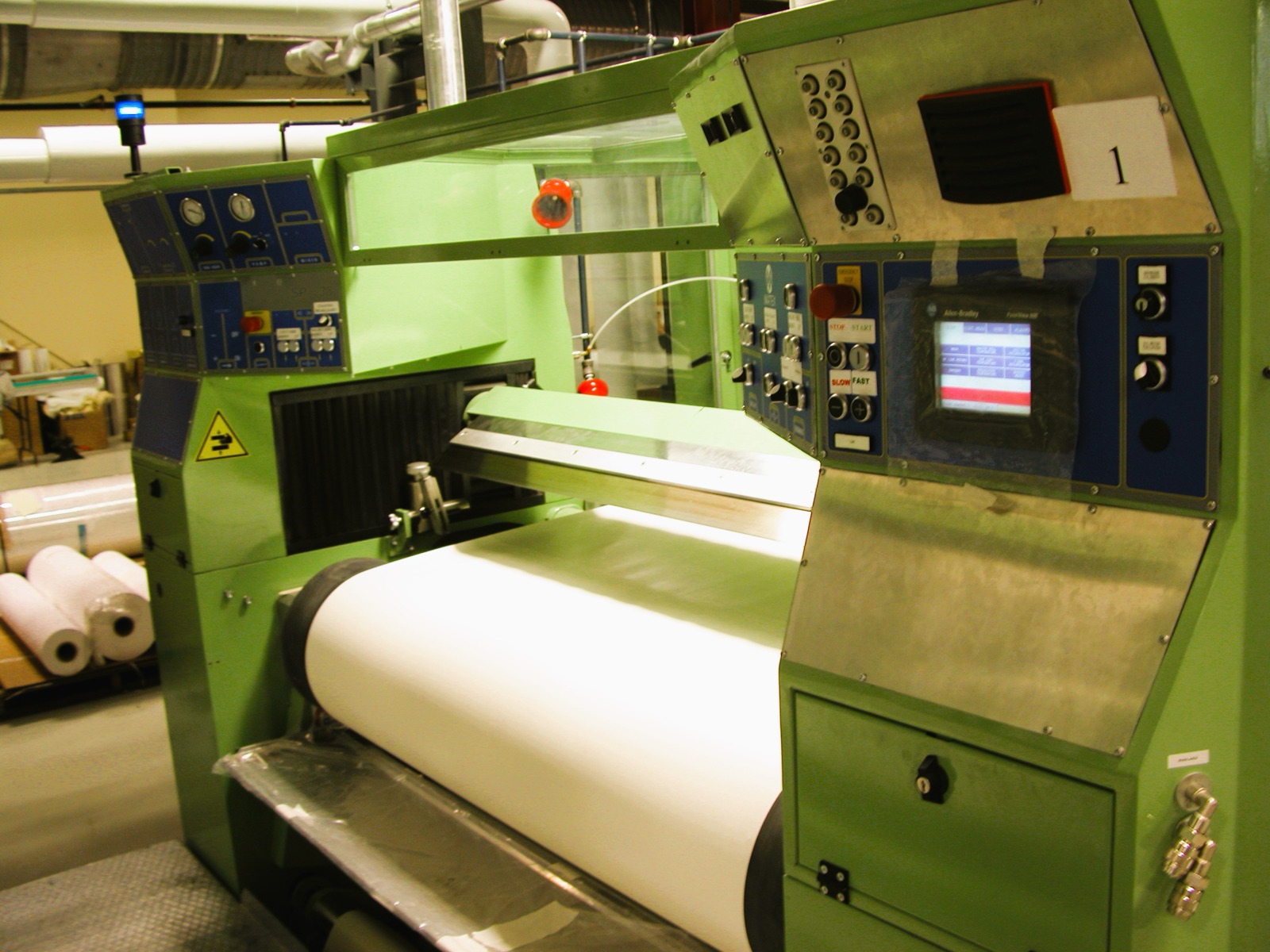
Slot Die Coating
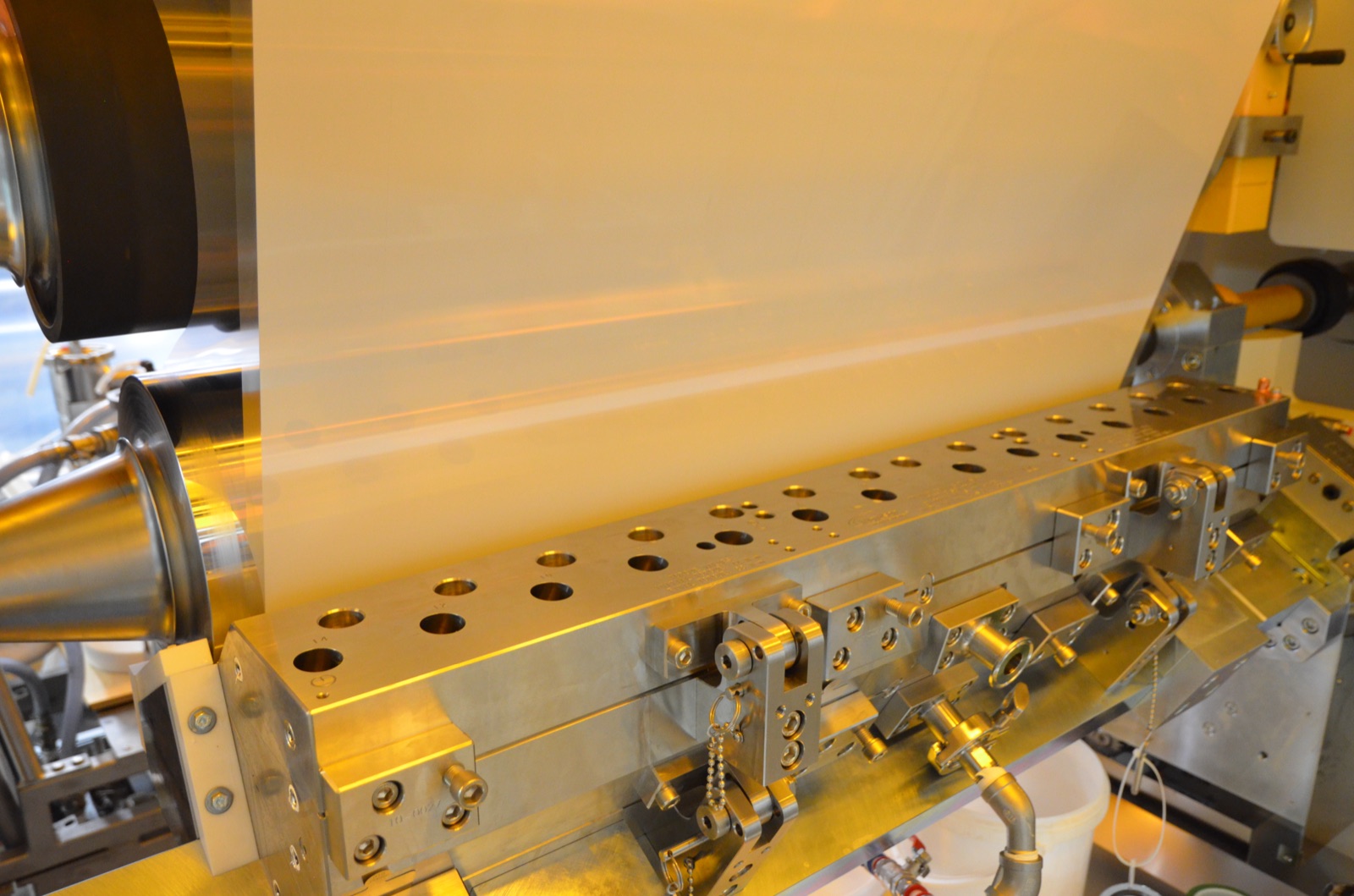
A premetered method: coating fluid is pumped through a precision-engineered die with a narrow slot, depositing an exact, predetermined amount of fluid directly onto the web. Because the coating is metered before it touches the web, there's no excess to remove afterward.
Why use it
Precision and minimal waste. Excellent control over coat-weight uniformity — critical in applications where consistency matters most.
Common uses
Battery electrode coating, membranes, optical films, and high-value electronics applications where uniformity and repeatability are essential.
Gravure Coating
An engraved roller with a pattern of small cells picks up coating fluid from a reservoir. A doctor blade wipes excess fluid from the roller's surface, leaving fluid only in the engraved cells, which is then transferred to the web. The volume of the engraved cells directly determines the coat weight.
Direct gravure
The engraved roller contacts the web directly, transferring fluid straight from the cells onto the substrate.
Reverse gravure
The engraved roller rotates in the opposite direction to web travel, creating a shearing action that produces a smoother, more leveled finish than direct gravure.
Offset gravure
Fluid transfers from the engraved roller to an intermediate roller before reaching the web, allowing for gentler transfer suited to more sensitive substrates.
Why use it
High-speed, precise application of thin coatings, with coat weight easy to control by changing the engraving pattern.
Common uses
Printing inks, thin functional and adhesive coatings, and high-speed applications where cell-volume control gives reliable, repeatable results.
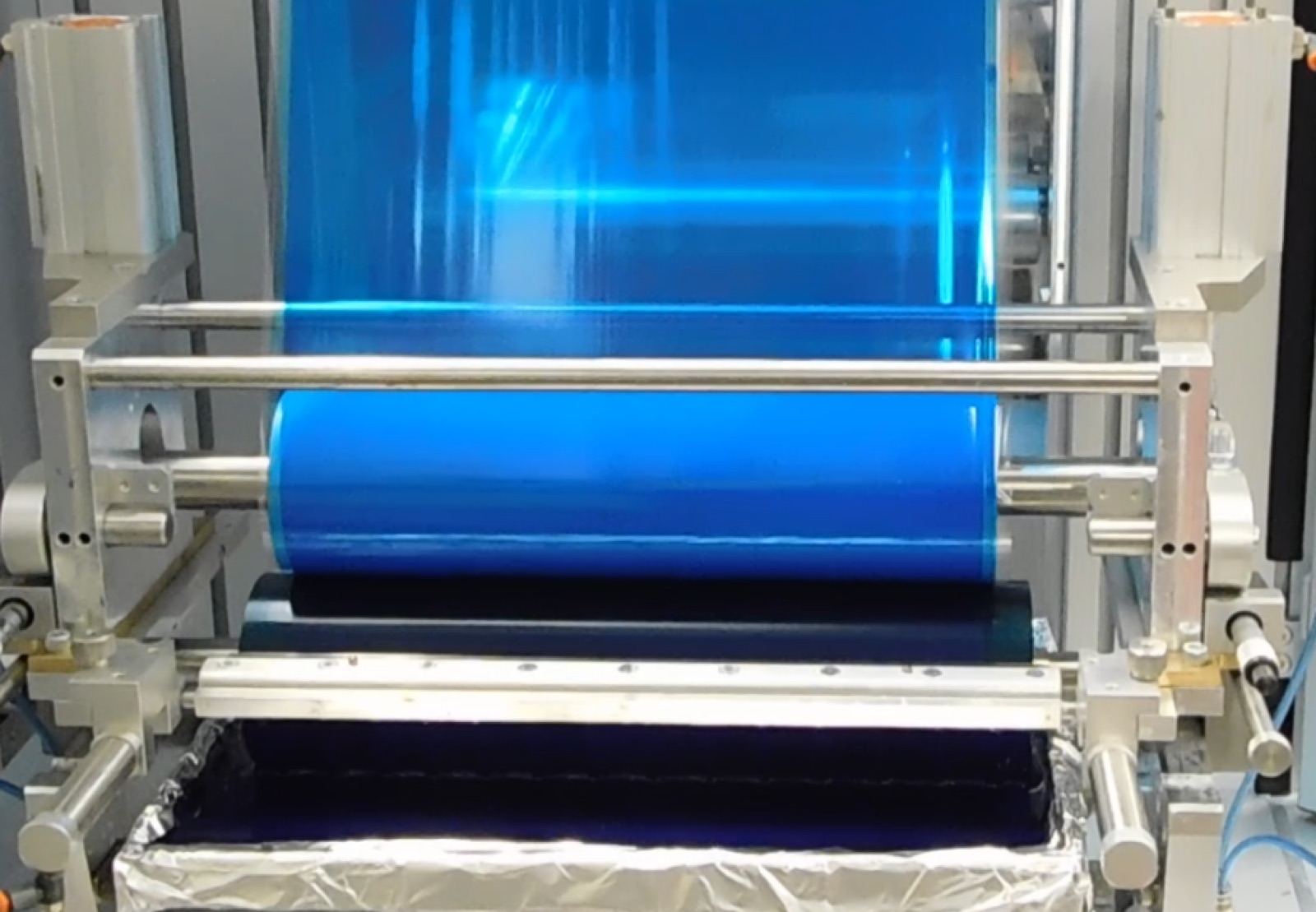
Reverse Roll Coating
Coating fluid is metered onto an applicator roller by precisely setting the gap between it and an upstream metering roller. The applicator roller then transfers the fluid to the web as it passes over a backing roller, running in the opposite direction to web travel.
Why use it
Precise, roller-gap-based coat-weight control across a wide range of viscosities, without fluid pooling directly on the web.
Common uses
Coated papers, films, and foils where consistent, roller-controlled metering is preferred over a doctor blade.
Reverse roll coating station
Curtain Coating
A continuous, falling curtain of fluid coats the web as it passes beneath, with no part of the equipment contacting the web. The curtain must remain stable and unbroken, requiring careful control of fluid rheology and a minimum line speed.
Why use it
High-speed, contactless application across wide coating widths, with the ability to apply multiple layers simultaneously in a single pass.
Common uses
Hot-melt adhesive application in hygiene and nonwoven products (diapers, personal care), photographic film, and other contactless-coating applications.
Curtain coater in operation
Other Coating Methods
A number of additional methods are used across the industry for specific requirements:
Air Knife Coating
Fluid is applied in excess and a focused jet of air blows off the surplus, leaving a very thin, uniform layer. Common in paper coating.
Spray Coating
Fine droplets of fluid are sprayed onto the web, offering flexibility across a range of fluids at some cost to precision compared to premetered methods.
Dip Coating
The web is immersed in a bath of coating fluid and withdrawn — a simple method often used for saturation or impregnation-style coatings.
Choosing a Coating Method
| Method | Viscosity Range | Precision | Speed | Cost / Complexity |
|---|---|---|---|---|
| Mayer Rod | Low | Moderate | Moderate | Low |
| Knife-Over-Roll | Low–High | Moderate | Moderate | Low–Moderate |
| Slot Die | Low–Medium | High | Moderate–High | High |
| Gravure | Low | High | High | Moderate–High |
| Reverse Roll | Low–High | High | Moderate | Moderate |
| Curtain | Medium | Moderate | High | High |
Coating method selection also depends on factors like solvent-based versus water-based versus solventless formulations, drying and curing technology, and specific defect modes for each method. This page is a starting point — for practical detail on coat-weight ranges, troubleshooting, or process optimization, ARC's coating SMEs and technical library are the right next step.