
Many substrates — especially polyolefin films like polyethylene and polypropylene — have naturally low surface energy, which prevents inks, adhesives, and coatings from properly wetting and bonding. Surface treatment modifies the substrate's surface chemistry to increase that energy and improve adhesion, without changing the bulk properties of the material.
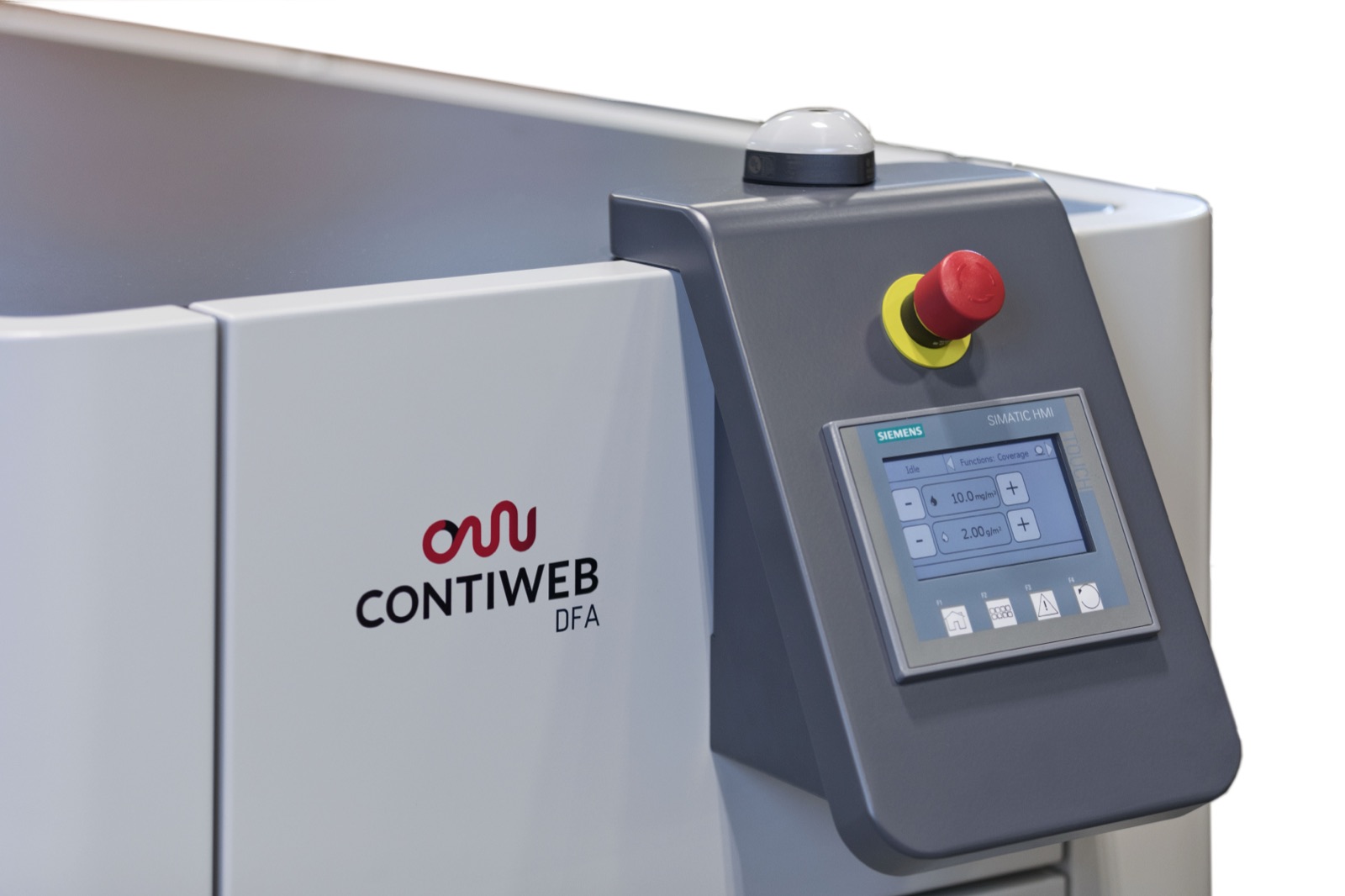
The Basics
- Surface energy
- A measure of how strongly a material's surface attracts and bonds with other substances, expressed in dynes per centimeter. Higher surface energy means better wetting and adhesion.
- Wetting (wettability)
- How well a liquid — like an ink or adhesive — spreads evenly across a surface rather than beading up.
- Treatment level
- The degree to which a treatment process has raised a substrate's surface energy, typically checked with a dyne test or contact angle measurement.
- Treatment decay
- Surface treatment isn't permanent. Treated surfaces gradually lose surface energy over time (hours to days), which is why materials are often treated close to the time they'll be printed, coated, or laminated.
Common Treatment Methods
Corona Treatment
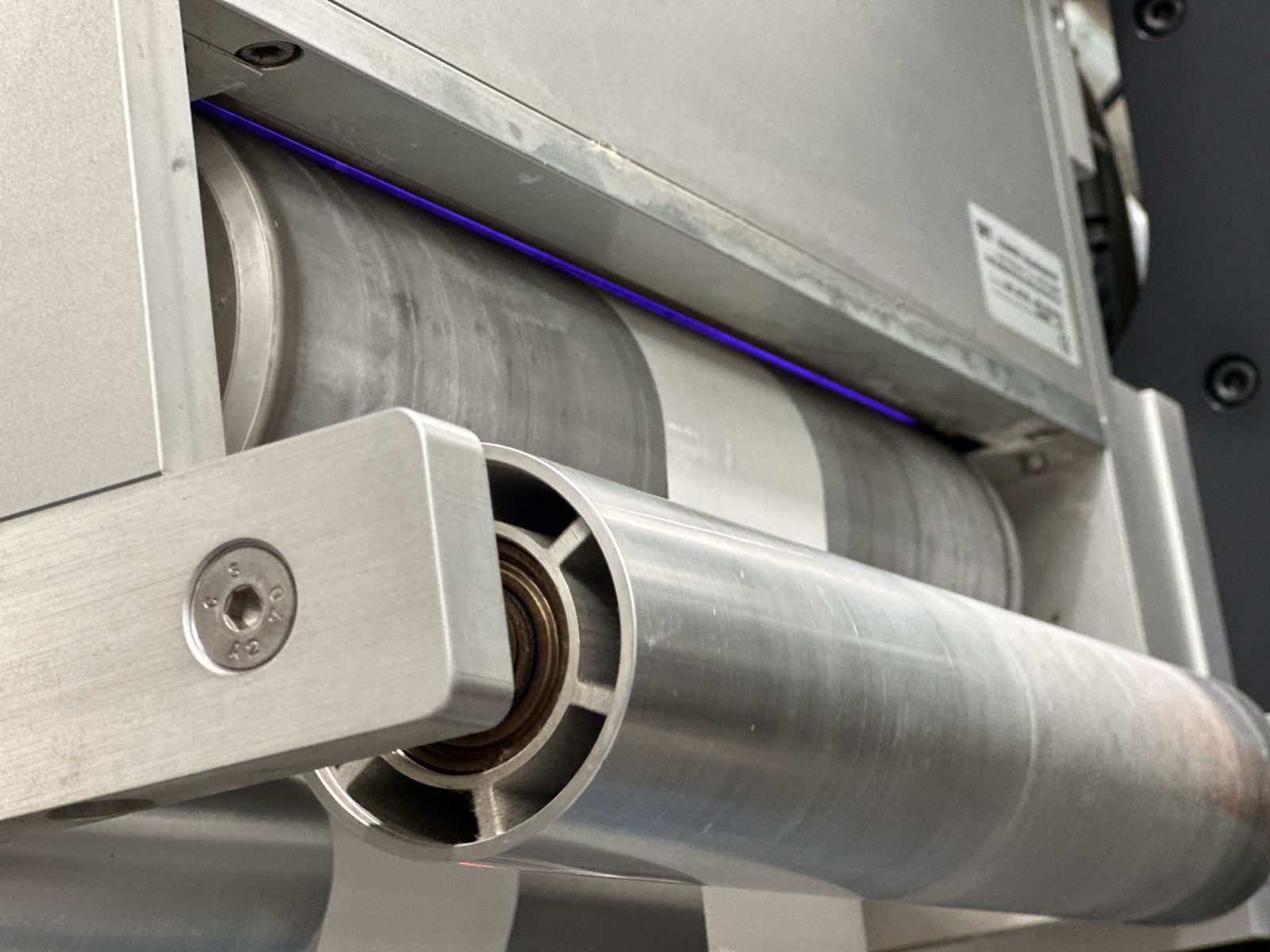
A high-voltage electrical discharge is generated across an air gap between an electrode and a grounded roller the web passes over. The discharge ionizes the surrounding air, creating reactive species that bombard and oxidize the web's surface, raising its surface energy.
Why use it
Widely used and cost-effective; works well on most common polyolefin films.
Common uses
Films headed into printing, coating, or laminating — especially polyethylene and polypropylene packaging films.
Plasma Treatment
A plasma (ionized gas) generated at or near atmospheric pressure is directed at the web's surface. Different process gases — air, nitrogen, argon — achieve more specifically tailored surface chemistries than corona typically allows.
Why use it
More precise surface chemistry control than corona; treats a broader range of substrates with less ozone generation.
Common uses
Medical devices, specialty films, and applications requiring tightly controlled surface chemistry.
Atmospheric plasma treatment station
Flame Treatment
An open flame from a fuel/air or fuel/oxygen mixture passes directly over the web's surface, oxidizing it and raising surface energy — similar in principle to corona and plasma but through direct flame contact.
Why use it
Achieves very high, long-lasting treatment levels; well suited to more heat-tolerant or thicker substrates.
Common uses
Rigid or semi-rigid plastic containers, thicker films, and substrates that can tolerate direct flame exposure.
Flame treatment station in operation
Note: flame treatment (modifying surface energy) is distinct from flame lamination (on the Laminating page), where a flame melts a foam surface for immediate bonding. Both use an open flame but for different purposes.
Measuring Treatment Level
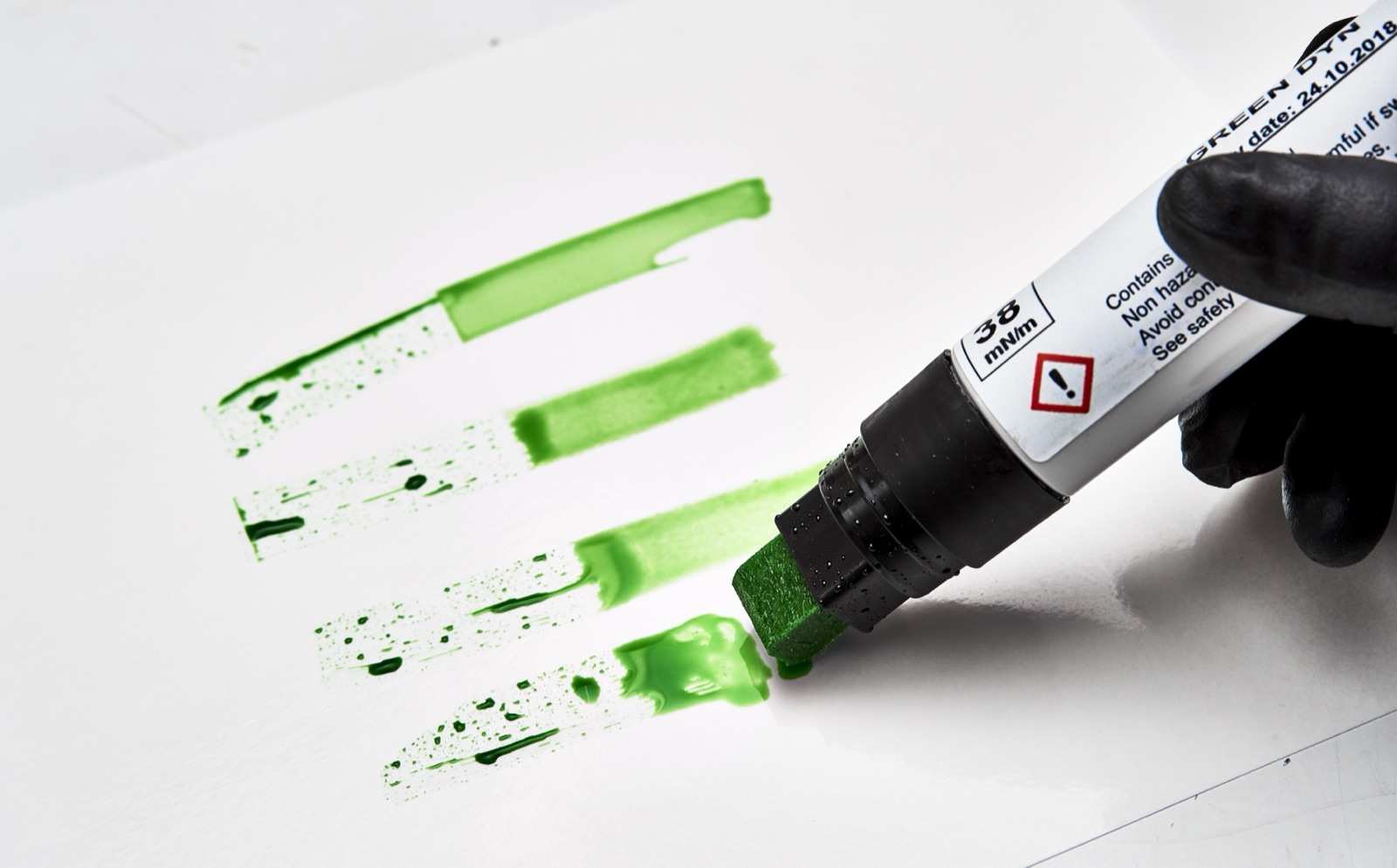
- Dyne test
- Fast on-press quality check using dyne pens or fluids calibrated to specific surface energy values. Fluid beads up if surface energy is below the test value; spreads evenly if at or above it.
- Contact angle measurement
- A droplet of liquid is placed on the surface and the angle it forms is measured — more precise than a dyne test, typically used in lab settings.
Contact angle measurement instrument in a lab
Choosing a Treatment Method
| Method | Substrate Heat Tolerance | Treatment Level | Chemistry Precision | Cost / Speed |
|---|---|---|---|---|
| Corona | Moderate | Good | Standard | Low / Fast |
| Plasma | Low heat | High | Precise | Moderate |
| Flame | Must tolerate heat | Very high | Good | Moderate |
Surface treatment selection involves additional considerations around specific formulations, defect modes, and safety systems — areas that benefit from SME review before this page goes live.